
Put simply, Article 4 is a planning direction made by local authorities that removes permitted development rights.
Normally developers have permitted development rights to convert a property from residential (C3/Dwelling house) to HMO (C4/House in multiple occupation, consisting of six people or fewer) without needing planning permission from the council. An Article 4 direction removes these rights, and planning permission will need to be obtained first before proceeding.
Why do local authorities use Article 4 direction?
Local authorities may use an Article 4 direction to restrict the prolific use of permitted development rights. In a residential area with an over-proliferation of residential to HMO conversions, concentrations have led to issues such as pressures on parking, noise, increased crime, and a decline in the more settled population. Whilst most authorities accept that HMOs play an essential role in providing low-cost housing, particularly for young people, they want to ensure that HMOs are more evenly dispersed throughout an area.
Where you’d expect to see Article 4 directions
Article 4 directions are made when the character of an area of acknowledged importance would be threatened, permitted development rights are therefore more restricted. They are most common in:
- A conservation area
- A national park
- An area of outstanding natural beauty
- A World Heritage Site
The presence of Article 4 directions is an essential consideration for developers seeking to use permitted development rights. Now that we know why local authorities use Article 4 and what areas would you likely see it in, we can help you to identify the areas.
How to use our Article 4 overlay feature:
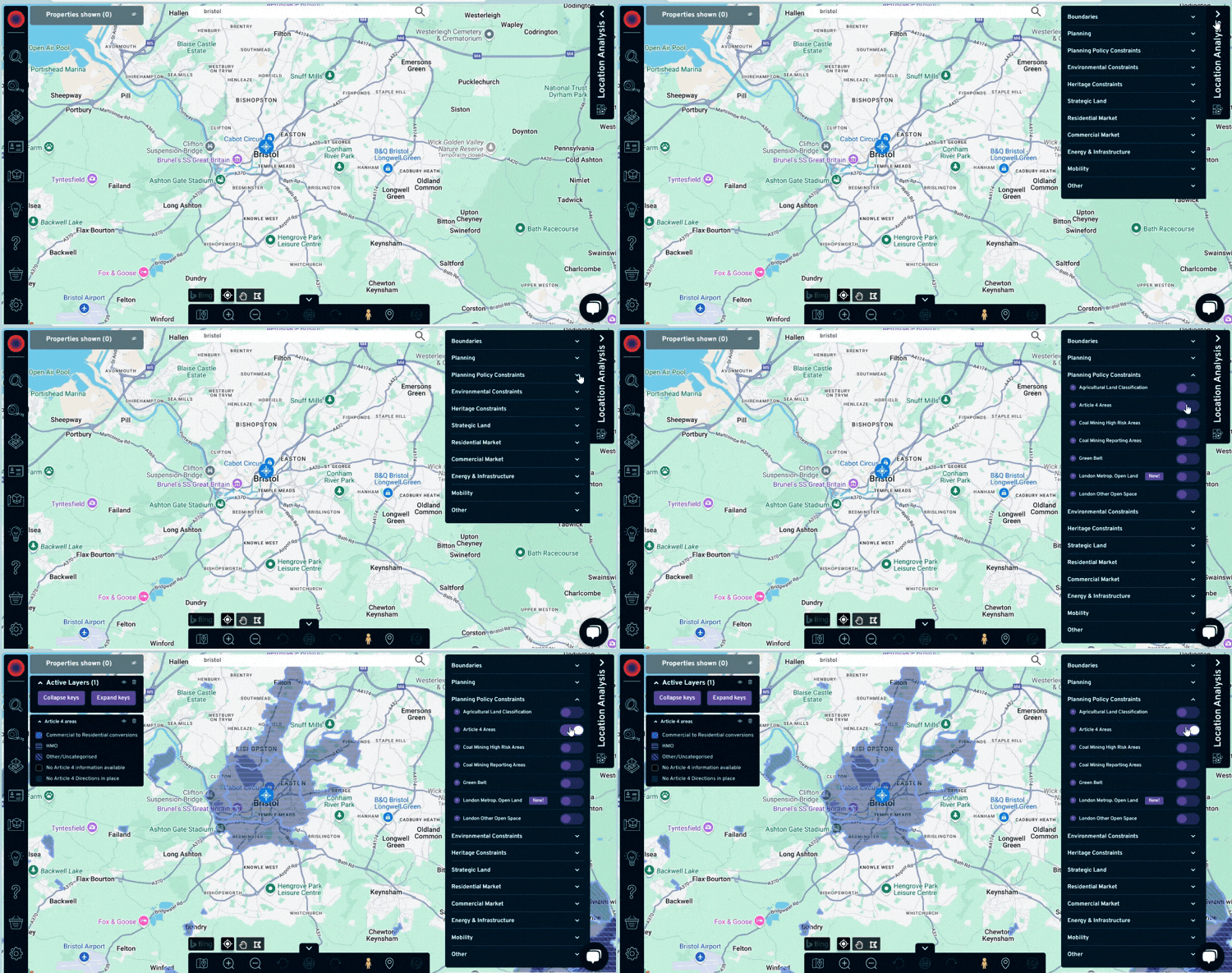
Simply select the Location Analysis tool in the top right of the Nimbus platform, then select the Article 4 overlay from the Planning Policy dropdown menu.
The light blue shading indicates the area in which Article 4 directions are in place. In areas with no data highlighted, users can simply use our ‘request this data’ feature.
Want to learn more about how Nimbus will help you assess potential land and property opportunities? Book a demo today.

