
The UK Government's Autumn Budget 2026 introduces changes to property taxation, business rates and investment incentives, alongside further commitments to housing and infrastructure. But what do these measures mean for property professionals, and where could they influence investment, development and occupier decisions?
Delivered on 28 October, the Budget sets out measures that could influence activity across the residential and commercial property markets.
While some changes will take effect in the coming months, others will take longer to filter through. For property professionals, the focus will be on how these measures affect costs, development viability, valuations and market demand.
We take a closer look at the key announcements and what they could mean for the sector.
Business rates reform and the future of the high street
One of the more significant announcements for commercial property is additional business rates support for retail, hospitality and leisure businesses in England.
From April 2027, the threshold for 100% Small Business Rates Relief will rise from £12,000 to £18,000 in rateable value for qualifying properties, with the upper threshold for tapered relief increasing to £21,000. The government has also confirmed that increases in business rates bills for qualifying retail, hospitality and leisure properties will be capped at CPI inflation for two years.
For landlords and agents, these changes could influence occupier affordability and the viability of certain high street premises. Smaller retail units may become more attractive to qualifying businesses, although the impact on demand and rental values will depend on local trading conditions and the wider cost of occupation.
For those advising on commercial assets, understanding local rental evidence, occupier activity and surrounding property uses will be important when assessing how individual locations respond.
Nimbus' occupier intelligence, commercial comparables and location analysis can help property professionals examine local market activity, assess rental evidence and better understand the factors influencing demand.
Property taxation and investment decisions
The Budget confirms a further two-percentage-point increase in income tax rates on property income from April 2027, building on the changes announced in 2025. This will bring the basic, higher and additional rates to 24%, 44% and 49% respectively in England, Wales and Northern Ireland.
For individual landlords, the changes add further pressure to investment returns at a time when financing costs and operating expenses are already influencing portfolio decisions.
The government has also confirmed further details of the High Value Council Tax Surcharge, due to take effect in England from April 2028, including deferral arrangements, discounts and exemptions, alongside an additional premium for qualifying long-term empty properties.
Alongside these measures, changes to capital allowances could affect the timing and treatment of qualifying investment expenditure. From 1 January 2027, the main-rate first-year allowance will increase from 40% to 50%, while the main-rate writing-down allowance will fall from 14% to 12% from April 2027.
Together, these changes may prompt investors to reassess acquisition strategies, asset performance and planned capital expenditure, although their impact will differ across ownership structures and property types.
As investors reassess returns, access to reliable transaction evidence becomes increasingly important. Changes in taxation may influence what buyers are prepared to pay, but the effects will vary across markets.
Nimbus' Complete Comparables Tool brings together more than 30 million commercial, residential and land comparables, alongside AI-powered deal detection and contextual property intelligence. This gives surveyors, investors and advisors a more complete view of transaction activity, supporting valuations and helping them assess how pricing and market sentiment may be changing.
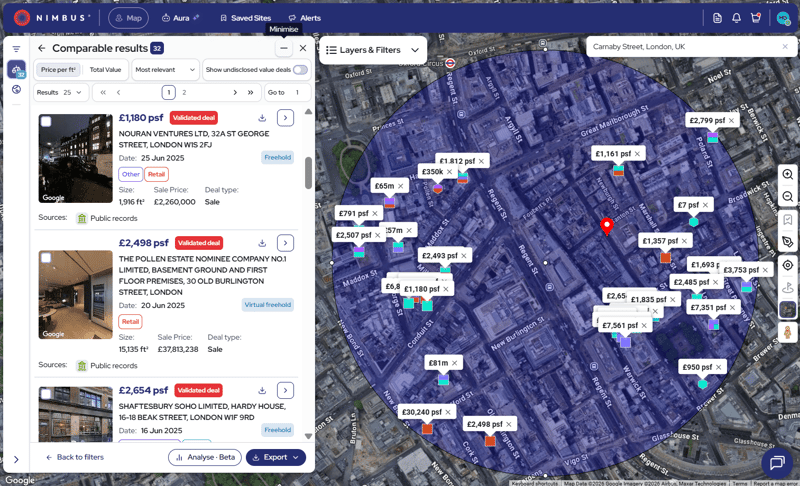
Exploring commercial property transactions and comparable values using Nimbus’ Complete Comparables Tool.
Housing investment and brownfield development
Housing remains a priority, with an additional £1.5 billion committed to the Social and Affordable Homes Programme and £4.7 billion confirmed for the new Your First Home equity loan scheme, designed to support first-time buyers in England.
For developers, one particularly relevant announcement is the planned exemption from Biodiversity Net Gain requirements for residential brownfield sites of up to 1.5 hectares in England.
The exemption could remove one cost consideration from smaller residential schemes. However, with the implementation timetable still to be confirmed, its effect on development viability will need to be considered alongside remediation costs, planning requirements and local market demand.
The changes may prompt renewed interest in previously assessed sites, particularly where relatively modest reductions in development costs could influence the overall appraisal.
Nimbus' site finding, ownership intelligence and planning data can support this early assessment, helping developers examine site characteristics, identify constraints and compare locations before progressing further investigations.
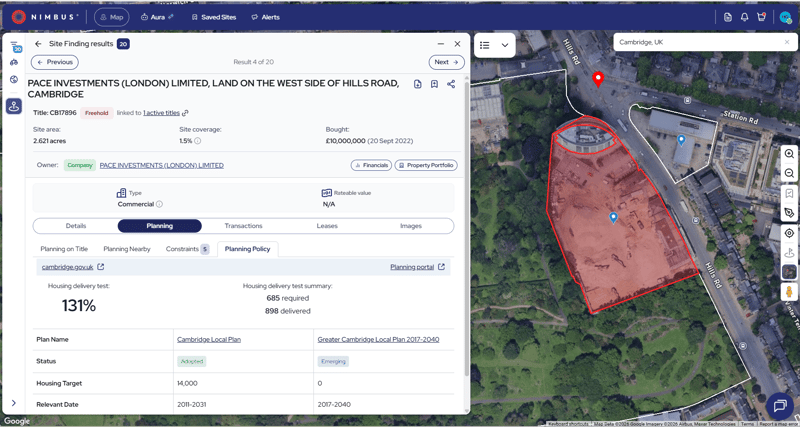
Assessing site ownership, boundaries and planning constraints using Nimbus' Site Finding Tool.
Infrastructure investment and regional development
The government has committed to publishing an updated infrastructure pipeline before the end of 2026, setting out more than £750 billion of planned investment over the next decade.
The Budget also includes further support for regional development, with new funding arrangements intended to give local authorities and mayors greater control over investment priorities.
For investors and developers, the significance of this investment will depend heavily on where projects are delivered. Improved connectivity, new employment centres and regeneration programmes could alter demand for commercial space, although the effects will vary considerably between locations.
Understanding the surrounding property market will be important when assessing these changes.
Nimbus' National and Radius Search functionality, combined with ownership, planning and market intelligence, allows professionals to examine activity across wider geographic areas and assess how individual locations compare.
Data centres and digital infrastructure
Data centres also receive specific attention in this year's Budget, with the introduction of a new Data Centre Covenant and proposals to support electricity connections for strategically important developments.
Access to power continues to be one of the biggest considerations for data centre development, and the government's proposals could influence which projects are able to progress.
However, enhanced support is targeted towards strategically important developments that meet the Covenant's requirements. Wider planning, infrastructure and environmental considerations will remain important.
For those assessing potential sites, power availability will continue to be a crucial part of due diligence, alongside planning, land ownership and surrounding development activity.
Nimbus' planning intelligence, ownership data and site assessment tools can help professionals build a clearer picture of potential locations, identify surrounding development activity and support early-stage assessments.
What comes next for the property market?
The Autumn Budget 2026 presents a mixed picture for the property market. While measures supporting business rates, housing delivery and infrastructure investment could encourage activity in certain sectors, changes to property taxation and continued economic pressures will influence how investors and developers assess risk.
The impact of these measures won't be felt equally across the market. Property type, location, occupier demand and local development activity will all play a part in determining where conditions improve and where challenges remain.
For property professionals, having a reliable understanding of these differences will be important.
With access to more than 2,000 trusted data sources, over 30 million comparables and connected planning, ownership and location intelligence, Nimbus provides the evidence needed to assess market activity, understand individual assets in context and support more confident property decisions.
Want to explore how Nimbus can support your next project or investment? Speak to our team.